
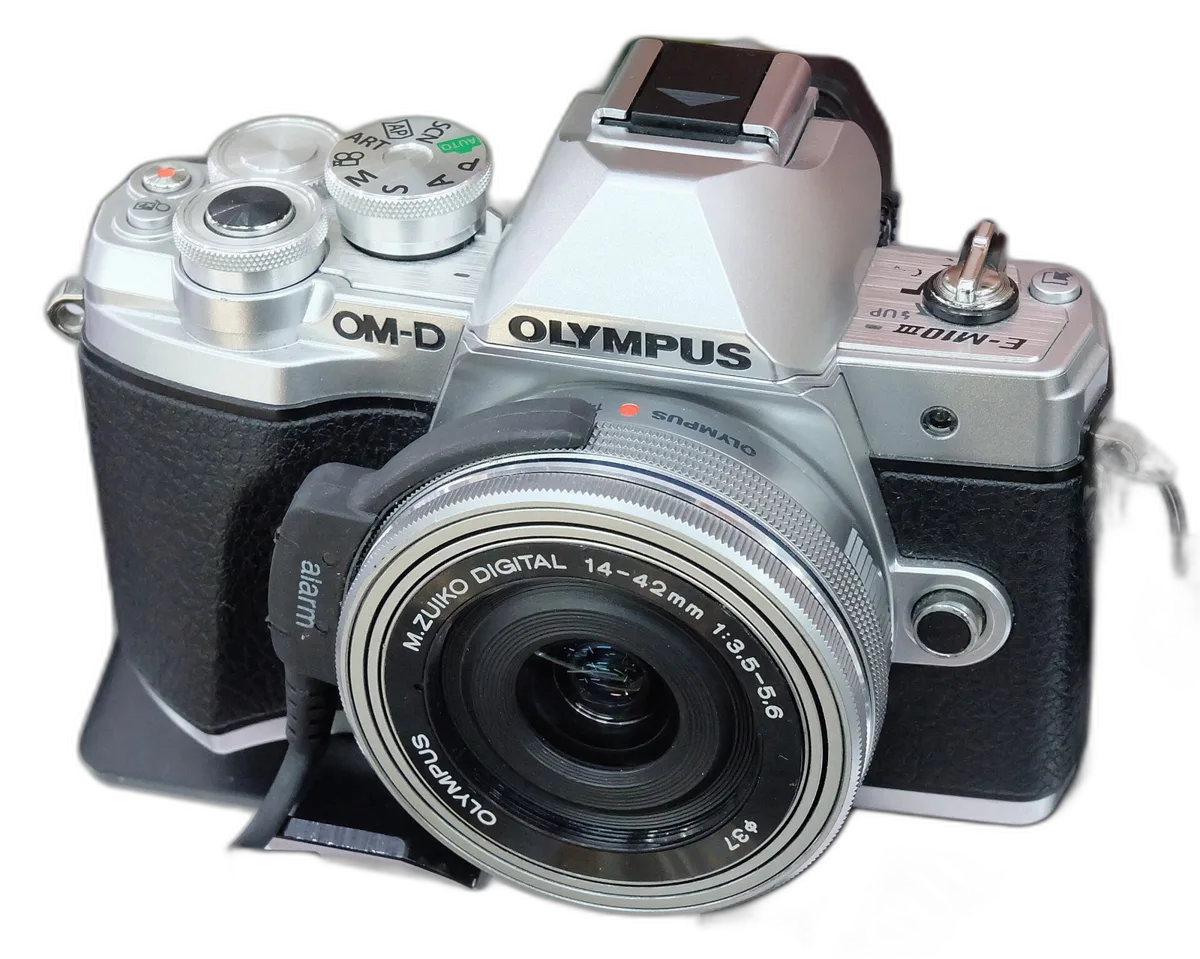
The body that survived two generations: how the Olympus OM-D E-M10 Mark III became the people's mirrorless camera
In 2017, Olympus released the third reincarnation of the compact OM-D. Owners of the first two models were waiting for 4K and improved autofocus, but got a familiar body with new firmware and a grippier leatherette. Photographers valued it for its five-axis stabilization, which allowed handheld shooting at 1/4 second, and for its light weight — the body weighed only 410 grams. On trips it took up no space, and the BLS-50 battery lasted about 330 shots. However, there was a fly in the ointment: tracking autofocus lagged behind competitors, and the rubber leatherette on the rear panel peeled off for many within a year. Owners treated it with superglue and joked that this made the camera even more “people's.” Today, on the secondary market, a working body goes for around 22 thousand rubles, and a new one in the box for up to 45 thousand.
And would you choose Olympus for stabilization or Sony for autofocus? Share your experience in the comments!
💬 Discussion and reviews (0)
Join the museum club to take part in discussions and earn Bytes:
Sign In to Account