
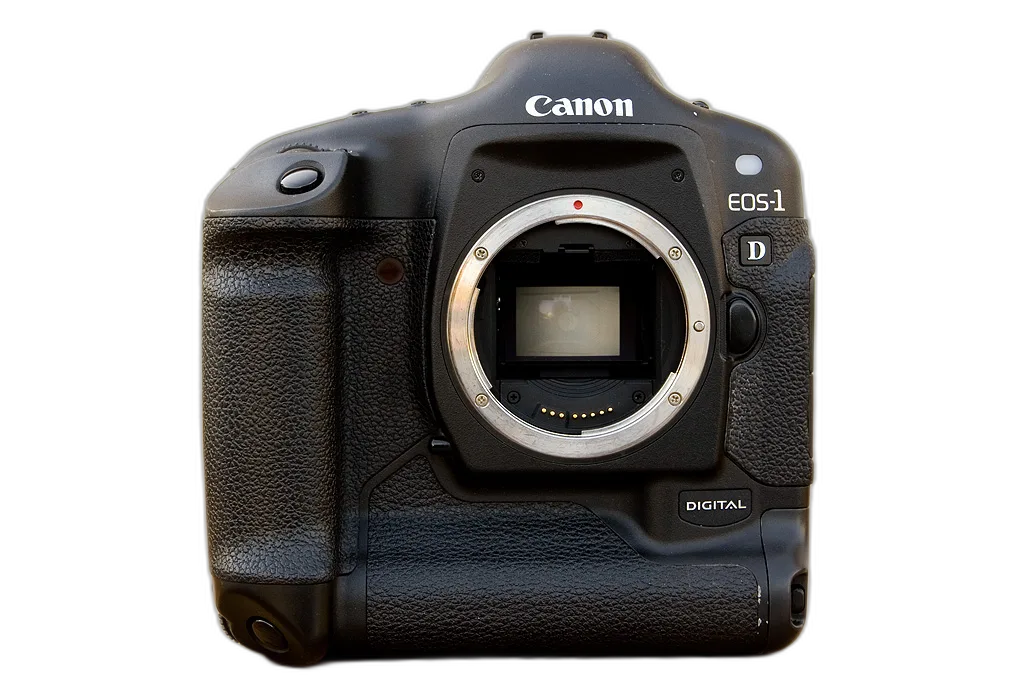
A body for the price of a seven: how the EOS-1D settled into the camera bag and stayed there for 20 years
In 2001, EOS-1D owners were a separate caste. It wasn't Canon's first digital single-digit body, but it was the first built on the film EOS-1V — so that reporters used to its weight and balance wouldn't have to relearn. Photographers carried two or three 400-gram NP-1 batteries, a PA-V16 charger and a coil of FireWire cable in their bags, because the 1D shot only 400–500 frames per charge and offloaded them to a laptop via cable, not through a card reader. The ailment of oxidized contacts in the BG-ED3 and “dying” Ni-MH cells was so well known that newsrooms kept a soldering iron and a spare set of cells on hand. CompactFlash cards of 340 MB cost a fortune, and every RAW frame was worth its weight in gold — they shot one at a time, not in bursts. Today in the museum the EOS-1D starts up via a homemade Li-ion pack, clicks its shutter and reminds us: the digital era began with heavy metal and wires.
Argue it out: whose mount will survive more lens changes on assignment — EF with electronics or F-mount with mechanics, and whose FireWire port fell off sooner when shooting in the cold?
💬 Discussion and reviews (0)
Join the museum club to take part in discussions and earn Bytes:
Sign In to Account